
Learning is a complex and dynamic process that involves acquiring, storing, retrieving, and applying new information. Many factors, such as motivation, attention, emotion, prior knowledge, context and feedback can influence learning. In this blog post, I am discussing some cognitive and neural mechanisms underlying how humans learn and process new information.
Information Processing Model
One of the most influential learning theories is the information processing model, which proposes that learning occurs in three stages: sensory memory, working memory, and long-term memory. Sensory memory is the initial stage that holds incoming sensory information briefly (less than a second). Working memory is the second stage that temporarily stores and manipulates a limited amount of information (about seven items) for a short period of time (about 15–30 seconds). Long-term memory is the final stage that stores and organizes large amounts of information for an extended period (from minutes to years).
Sensory Memory
Sensory memory is a filter that selects relevant information to be transferred to working memory. Working memory is a workspace that processes and integrates new information with existing knowledge stored in long-term memory. Long-term memory acts as a repository that encodes and consolidates information for later retrieval and use.
Working Memory
The transfer of information from sensory memory to working memory depends on attention, which is the ability to focus on specific stimuli while ignoring others. Attention can be influenced by external factors, such as salience, novelty, or relevance of the stimuli, or by internal factors, such as the learner’s goals, interests, or expectations. Attention can also be divided into different types, such as selective attention (focusing on one stimulus while ignoring others), sustained attention (maintaining focus over time), or divided attention (switching focus between multiple stimuli).
Long-Term Memory
The transfer of information from working memory to long-term memory depends on encoding, which transforms information into a format that can be stored in long-term memory. The level of processing, or how in-depth the analysis and elaboration are, can have an impact on encoding. The deeper the level of processing, the more likely the information will be remembered. For example, encoding information based on its meaning (semantic encoding) is more effective than encoding it based on its appearance (visual encoding) or sound (acoustic encoding).
You can also read more about Learning Techniques and Strategies in the following post:
Retrieval of Information
The retrieval of information from long-term memory depends on cues, which are stimuli that trigger or facilitate the recall of information. Cues can be external, such as words, images, or sounds associated with the information, or internal, such as thoughts, feelings, or states similar to those experienced during encoding. The effectiveness of cues depends on how well they match the encoded information and how distinctive they are from other cues. For example, specific and unique cues are more likely to trigger recall than general and typical ones.
Application of Information
The application of information from long-term memory depends on transfer, which is the ability to use learned information in new situations or contexts. The degree of abstraction or generalization of the learned information, as well as the similarity between the original and the particular context, can all affect transfer. For example, transfer is more likely to occur when the learned information is relevant, applicable to the new situation or context, and expressed in terms of principles or rules rather than examples or facts.
Metacognition
Learning and processing new information is not a linear or passive process but rather an interactive and active one. Learners constantly monitor their learning and adjust their strategies accordingly. This process is known as metacognition, the awareness and regulation of one’s cognitive processes. Metacognition involves two components: metacognitive knowledge and metacognitive skills. Metacognitive knowledge is the understanding of one’s cognitive strengths and weaknesses and the factors that affect learning outcomes. Metacognitive skills include planning, monitoring, evaluating, and controlling learning activities.
Social Cognition
Learning and processing new information is also not an isolated or individual process, but rather a social and collaborative one. Learners interact with other learners and instructors through various forms of communication and feedback. This process is known as social cognition, which is the influence of social factors on cognitive processes. Social cognition involves two aspects: social influence and social interaction. Social influence is the effect of other people’s opinions, beliefs, or behaviours on one’s cognitive processes. Social interaction is the exchange of information, ideas, or perspectives through verbal or nonverbal communication.
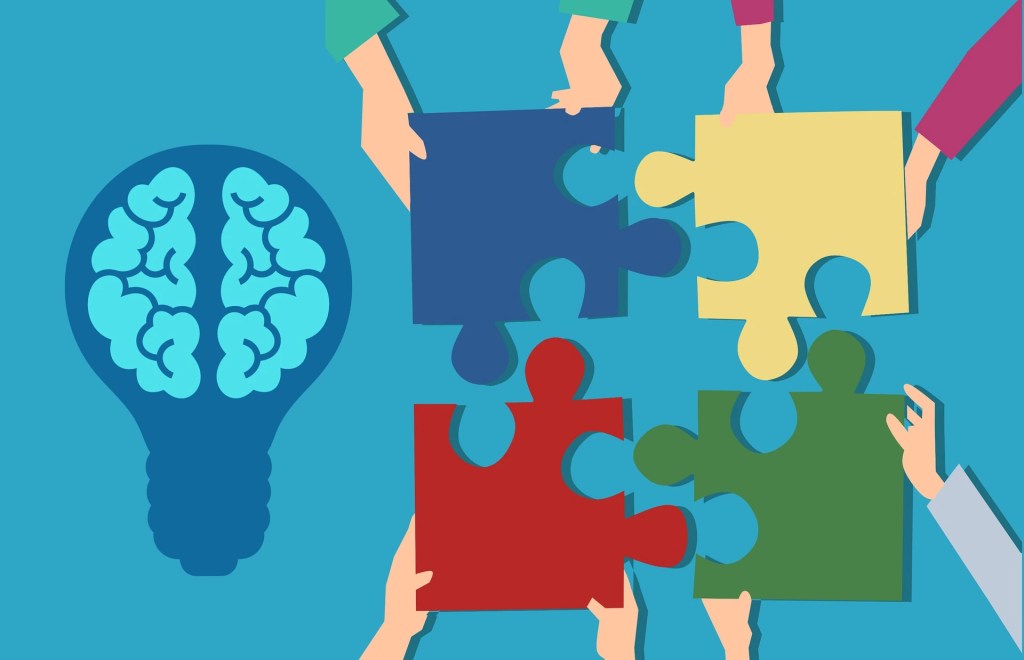
In conclusion, learning and processing new information is a multifaceted and dynamic process that involves various cognitive and neural mechanisms at different stages and levels. Learning can be enhanced by optimizing attention, encoding, retrieval, transfer, metacognition, and social cognition strategies.



 Mind Over Matter
Leave a comment